Born on the 8th May 1963 in France, Michel Gondry is a prestigious film, music video and commercial director. Gondry has also been accredited Academy Awards for Screenwriting. Audiences are familiar with his work due to his noticeable visual style and manipulation of mise en scéne. Gondry is extraordinarily infamous for his music videos: “Heard ‘em Say” - Kanye West, “Fell in Love with a Girl” - The White Stripes and “Around the World” performed by Daft Punk (shown below).
Gondry also allowed the film industry to advance massively. He was the director to invent the technique of several cameras taking pictures in the same time around the subject. This technique was used for the first time in a commercial for insurance and in Bjork’s “Army of Me” video. Although the technique became infamous in the film Matrix (1999 - Bullet Time). Also, Gondry was a pioneer for the morphing techniques which he developed through “Je danse le Mia” (shown below).
“Sometimes it’s better to have less money [for budget] and more freedom” - Michel Gondry
“Every great idea is on the verge of being stupid” - Michel Gondry
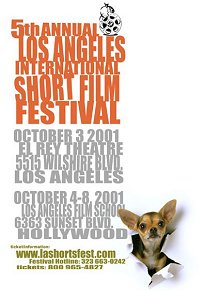
Founded by Robert Arentz in 1997, the La Shorts Fest is amidst the largest short film festivals in the world. With more than 250 film screenings per annual festival, the festival lasts a week in the prestigious city of Los Angeles, California. The attendance figures reach up to 8,000 festival goers, consisting of cinema attendees, filmakers and entertainment professionals. The short films are screened and finally selected by a jury panel who then democratically vote on the final nominated film selections, Ben Affleck once appeared on the judging panel. Previous venues the festival has been held at include the Los Angeles Film School, ArcLight Hollywood Cinemas and Laemmle Sunset 5 Hollywood.
The desired award, the “Best of Fest” winner will receive a Panavision donated film camera package, available for up to four weeks of filming, and valued at roughly $60,000. The award categories are:
Shane Meadows produced this short film on a mobile phone and was created to promote the Nokia shorts competition in 2005. Meadows exhibits his recognisable style straight away in this short film as he places the credits upon the wall of the location, adding a grittier element. The dark urban non-diegetic music is mixed with diegetic light sounds to keep with the realistic theme. Although the short is just a man and a women running down the stairs to eventually bump into each other, it is made more exiting by Meadows’ use of shots. He uses steadycam on both the protagonists so that we can see their expressions. However, their faces are hidden by hats denoting that they are dark, demurring characters. Low angle close-up shots are used of the hand gripping the rail, and establishing shots are used to illustrate the environment.
These various shots help to build the tension and suspense along with the non-diegetic music. The location is a dark, gritty council estate also helping to convey the types of people the protagonists are. The protagonists finally collide and the music is brought to a halt. The fact that they bump into each other and exaggerate the bump, standing there looking angry, keeps to the stereotypical judgement of someone who lives on a council estate. The short piece is very effective as the suspense is brought to its height and leaves the audience on a cliff-hanger, we don’t know how they solved the situation, and did they argue about whose fault it was? Carry on with where they were going? Call the police? Who knows!
Shane Meadows is a self-taught, British film-maker who hails from the Midlands in the UK. He was born in Uttoxeter, Staffordshire, UK on 26th December 1972.
Shane Meadows is a self-taught, British film-maker born on the 26th December 1972, who derives from the Midlands, United Kingdom. After years of trying to acquire the skills to succeed as a criminal mastermind, Shane developed a taste for video production. Meadows realised the only way to get his foot around the door of the film industry was through volunteering. The arrangement was that in return for working for Intermedia Film and Video Ltd, he would receive free access to video and editing facilities. Meadows asked family and friends to star in and help out with his productions but, contrary to popular belief, they were extremely hesitant at first due to his estranged past. Continuing to produce and edit short films, Meadow’s family became impressed with his skills and immediately were enthusiastic to get involved and help out. With an ever growing portfolio of short films, Meadows and co became profoundly frustrated that there were no events where they could exhibit their pieces. Therefore, they created their own short film festival called “Six of the Best” and it was held every other month at a local Staffordshire cinema. Instantly, the event grew in popularity and became a renowned, international video festival called “Flip Side”.
“Where’s The Money, Ronnie?” was the first short film to gain acclaim from the film industry. Meadows was then approached by Channel 4 to produce a documentary for their “Battered Britain” series, consequently he produced “King of the Gypsies”. Shane began to teach aspiring film makers with a series of videos called “Shanes World”, developing a recognizable philosophy. Meadows stated, “Stick to what you know, and you won’t go far wrong”.
Conspicuously, Meadows’ critical acclaim did not translate into cash; the box office figures for his feature films were low. However, Meadows then went on to produce “This is England” which undoubtedly put an end to his low box office attendance figures. Meadows tries to return back to his roots in short film whenever he can. Audiences are attracted to Meadows’ raw energy and enthusiasm, sending out the message that anyone can make a film with a little bit of talent, some borrowed equipment and a tenner for a raid on a charity shop.
Textual Analysis
Produced in 1943 by infamous experimental director Maya Deren, Meshes of the Afternoon is a Avan Garde accredited black and white short film, developed to stun the audience of the 1940’s. The first shot depicts the protagonist (Maya Deren herself) picking up a flower, Deren uses the shadows of the woman to confuse the audience to her whereabouts. The key is dropped down the stairs, with non-diegetic music used to accentuate the drop so that the audience take note of important aspects of the brief narrative structure. Deren uses establishing shots of the house, to depict the era and the idiosyncrasy of the situation, including the knife peculiarly falling out the bred, and the telephone off the hook. The protagonist walks up the stairs to discover the banging sound she hears, and finds a wide open window with a record playing the banging sound. Deren carefully frames her shots to confuse the audience about gravity and the whereabouts of the protagonist, the women then goes to sleep. Sacramental esque music is introduced, introducing an eerie tone to the piece. The shot is framed as if the audience is looking down a black hole at a figure, identical to the conventional idea of the grim reaper. This shot proposes a death theme to the piece. The audience is then acquainted with the face of the grim reaper, which is a reflection of its surroundings as it picks up a similar flower to the previous and begins to proceed down the path. The protagonist and her shadow follow the grim reaper, alongside the bizarre, tension building sacramental music.
The whole process is then repeated as she walks up the stairs to find her door unlocked, with a knife placed carefully on the stair. The protagonist then runs up the stairs, as if there is no gravity as she bounces along the stairwell. Deren disobeys the stereotypical “Hollywood” rule of continuity, cutting from shot to shot confusing the audience, completely destroying any form of narrative structure. The editing effects used by Deren are completely beyond their time, layering shots upon each other and using special effects on the grim reapers ‘face’. The knife is then found in the bed, and the eerie non-diegetic music repeats. The protagonist then falls out the window, the camera is used in un-conventional numerous angles to confuse the audience of the centre of gravity, it is difficult to watch as the previous banging sound replays again, speeding up, and we as the audience feel as if something ‘bad’ is going to happen. We are then shown the protagonist asleep on the arm chair as we saw her before, there are now two doubles of one character, we can assume this is her dream. The grim reaper chases down the path with the flower, repeating the process for a third time.
The key then comes out of the protagonist mouth as she opens the door to her home again, following the grim reaper figure up stairs. Deren angles the camera as if the house is moving as the protagonist climbs the stairs. The sacramental music starts again as the reaper places the flower upon her bed and turns to look at her, extraordinarily eerie, and the figure disappears. The grim reaper is shown walking along the path for a fourth time, as the protagonist chases after her, with the double looking on.
The key then turns into the knife. This could be conveyed as the knife is the answer, keys are conventionally used to open doors, open answers, therefore the fact the key repeatedly turns into a knife could be a symbolism of her suicidal thoughts. The three identical protagonists sit around a table and each stare and pick up the key which repeatedly turns into the knife. Non-diegetic music is used to enhance the change from key to knife. The protagonist picks up the key and her hand turns black. As this is a black and white film we could assume her hand is meant to turn red, a representation of the blood, illustrating death. Various shots are shown of her foot walking through various locations with a knife, very experimental and illustrating artistic ideas, also supporting the fact she is still dreaming.
The protagonist wakes up from her dream (supposedly) and finds her supposed husband staring straight at her, walking up the stairs with the same flower. The sacramental music starts again as the tension reaches a point within the piece. The flower turns into a knife, her husband looks at her sternly, she goes to hit him and a mirror breaks, we as the audience assume she is still dreaming at this point. The husband walks into the house for a final time to find the protagonist surrounded by smashed glass and with a slit to her throat, clutching a knife. The symbolism throughout is the only aspect we as the audience can interpret into some form of narrative. The protagonist continuously chases the grim reaper, symbolising that she is chasing death; she is looking for a way out, predominately suicide. The sacramental music conveys traditional African themes when animals are sacrificed for the gods; this also relates so suicide and thoughts about dying. Deren never portrays the protagonist to run away from the reaper; she is trying to find an answer, but the key keeps coming from inside her, as she is the answer to her suicide. During the scene where the three identical women sit around the table, Deren illustrates the conscious of the one woman, exploring her thoughts. Ideas, and symbolic themes could ever only be explored in this Avant Garde way through short film, as if it is not received well by an audience, no money is lost, no harm is done. Also the narrative would not suffice a feature film.
Born in 1917 Ukraine as Eleanora Derenkowsky, Maya Deren was a director who produced work during the 1940's and 1950's, her work is fundamentally associated with the term "Avant-Garde", which is a cutting edge, experimental way to develop ideas. In addition to her role as a film director, Deren was also a choreographer, writer, photographer, dancer and poet. There is a recognisable anti-mainstream stance within her films, making her work extraordinarily different and memorable as opposed to other short subjects exhibited throughout that period. Deren promotes the idea of artistic license and creative freedom through her work, believing that the way to experiment with new editing and film techniques is through creating short films.
Deren progressed through the 1940’s to receive various recognitions and awards, her most famous being the Grand Prix Internationale 16mm experimental film award at the Cannes Film Festival for “Meshes of the Afternoon”. Contrary to popular belief, Deren distributed all her own films and promoted them through lectures and screenings in the United States, also writing, directing, editing and starring in her own productions
Being infamous and recognised for her Avant Garde films, Deren heavily criticized the stereotypical Hollywood cinema stating, “I make my pictures for what Hollywood spends on lipstick”. Also believing that Hollywood “has been a major obstacle to the definition and development of motion pictures as a creative fine-art form”, setting her at an extreme distance from mainstream practices.
Maya Deren sadly passed away in 1961 at the age of 44, her work was noted as a key figure in the establishment of a New American Cinema which accentuated personal, Avant Garde, underground film making. The American Film Institute went on to create the Maya Deren Award to accredit independent filmmakers.
“The task of cinema or any other art form is not to translate hidden messages of the unconscious soul into art but to experiment with the effects contemporary technical devices have on nerves, minds, or souls.” - Maya Deren
Avant Garde is an adjective used within the English Language to accredit a piece of work that is progressive, radical and idiocentric with regards to politics, culture, history and art. The term Avant Garde can be used to define a piece of work which opposes the norms and values of modern day society. Although the term is derived from the French Language, it still remains impossible to trace back the origins of this word. The conceptualization of Avant Garde exclusively refers to accredited artists, writers, directors, composers, fashion designers, photographers and theorists whose work does not only hinder mainstream society but often has an outlandish, controversial political tone running throughout the work.
Controversial Avant Garde photograph with a deeply offensive political theme
Textual Analysis
- Conventional music, 'bling' on finger
- Opening shot of money
- Impression of robber taking place
- Subtle title giveaway on note with "Steal Away" written upon it, linking to the story and context
- Christian cross on wing-mirror
- Point of view shot, makes audience feel part of the story
- Shot of red telephone box, we know were in London, conventional giveaway
- Music switches from non diegetic to diegetic
- Audience is thrown straight into story, first time we see the main character
- Relationship conveyed, he took the heat off her by throwing water on windscreen
- Shot of tattoo on lower back, stereotypically known in slang as a "tramp stamp", rebel
- Focus pull of reaction, intriguing, keeps audience interested
- Shot slowed down to emphasise reaction, post production techniques
- Gun shot emphasised, the audience now know it has importance within the narrative
- Still shot, light at the end of the tunnel, 'exit' sign in shot, symbolic, relating back to christian cross
- Couple kiss, initial judgement of the characters being together is reassured
- Running sequence, music builds suspense, creates tension
- The character Michael returns, energy is immediately changed, keeping audiences interest levels high, challenging initial reactions
- They run to a secret tunnel, lighting then becomes darker, 'grimier', depressing
- Music now stops, audience get a chance to take a breather
- They are both laughing hysterically, get excitement from doing it, doing it for the thrill, childish, immature, didn't know what was in the case
- Red lighting, symbolism of death, blood money - sourced from a 'bad' environment
- Girl is turned on by the theft, aroused
- Girl is extraordinarily naive
- Water - cleansing of sins, christian symbolism is illustrated yet again
- They make out, silence, no music, audience can't relax, waiting for something to happen, tension has not been brought to a climax from the running scene as of yet
- Train pulls up, more quiet than an archetypal train, consequences and sins are creeping in, eerie
- Shot of doorstep to train, who is going to get off? suspense is building
- Challenging initial judgement of train, as when the two characters get on, it is completely full
- Climax has occurred, not what we as the audience expected
- Ironic - there is a man on the train preaching about christianity and sins
- The train could represent purgatory
- Woman offers foot washer man money, they just robbed someone, money symbolism
- Tension created, washing of feet, people acting in strange ways
- Lighting is bright again, maybe this is so all can be seen, including sins
- Drunk people bording bring the train atmosphere back to reality
- Money symbolism emphasised, they foot washer does not want it, people on train represent societies capitalist nature that "money can pay off everything", capitalist actions and attitudes
- Preacher is singing "Steal Away", references back to title, linking the narrative together, illustrating that the title has a purpose, gospel music, Bible symbolism
- Humbleness radiated by preacher, maybe he is a representation of god?
- Accompanied by non-diegetic music
- "Steal Away" starts off as a conventional 'heist' film, audiences initial judgements are proven different, judgements are being challenged yet again
- Makes the short harder to categorise, like most short films
- Referring back to subliminal message of cross on wing-mirror
- Girlfriend is holding Michael back
- Flashing lights on train, passengers did not notice, is this odd?
- Eye contact between Michael and foot washer, exchange smile, forgiveness? Michael now washes his foot, controversial
- Red dye vanishes, miracle? they are now given a chance to escape the crime, given a second chance
- Give money away, want to change lifestyle
- PLOT UNRAVELS, initial judgements challenged once again
- 'Seek Assistance', subtle messages to the narrative is animated through the mise en scene
- Judgement day - Michael is reunited with mum, in what we as the audience could consider some sort of heaven?
- Foot washer is there
- Therefore, Michael is actually deceased, girl is still alive, maybe this is a punishment? Or has she been given a second chance?
- Michael died to give girl a new start, relating back to biblical references, Jesus died for society
- Expectations repeaditly broken and challenged throughout, keeps the audience on the edge of their seats, intrigued to keep watching
- Good, well structured narrative, low production value
- Director conveyed his message within 7 minutes, could of been a feature length two hour film
Textual Analysis
- Shares title similarities to the film "About A Boy"
- Text message on opening, creating assumptions it is about a teenager, as they are stereotypically associated with advances in technology
- Getting dark, isolated field, why is she dancing?
- About A Girl, we want to find out about her, only shown silhouette, builds intrigue, at this point we expect her to be a soft, young girl
- Expectations are broken, she has a bushy accent, hard, harsh exterior
- Seems naive, not well educated, illiterate
- Kitchen sink realism
- Council estate, bickering
- Mother relates to the father as a 'bastard' to the children. Divorced parents, bad relationship.
- Girl is very upbeat and chatty
- We, as the audience understand the reality of her situation through the cutaways
- The audio/narrative alone isn't enough, as she plays down the reality of her circumstances tremendously
- We start to see she is not as innocent and naive as originally perceive her as. "i'm not that innocent. I know i'm not"
- "I'm thirteen, i'm not a child anymore", the audience can see she has been forced to grow up quickly.
- She is smart, she doesn't believe exactly what people tell her, especially her father.
- Our initial reaction to her and judgement of her is completely turned around, the audience can now empathise with her.
- Working class surroundings
- "Bless", she is patronising her father, not as naive as we, the audience, originally believed
- She is neglected, she makes out that she does not care, maybe she has had to put up this 'front'
- On bus with friends, we see her young, fun, sweet inner-being.
- Singing is her dreamworld, her escape, she puts her headphones in and blocks out her troubles
- Contrast in personality from when she is with family, and when she is with friends
- She has a cheeky, clever persona
- She knew the perfume saleswoman was being patronising and played on that, very clever comeback for a thirteen year old girl
- Mother spends all money on cigarettes, not food for her children
- Girl wants to spend all money with father, she shows hostility with her mother, the audience are not told why this is
- She wants to escape her background, singing is seen as the only hope for her
- Her mother buys a scratchcard, showing she wants to escape the situation, background and surroundings just as much as her daughter
- Girl is singing the infamous Britney Spears song "Stronger than yesterday", very relevant to her situation, also showing how she has had to grow up too quickly as opposed to other young girls her age
- No music in this short film, illustrating kitchen sink realism, documentry-like. Also highlighting how real the situation is as non-diegetic music does not exist in real life.
- Contrast in her personality - scenes where she is contemplating and scenes where she is happy, singing and dancing
- Ideas the audience originally assumed about relationships with her parents are confirmed
- From the close-ups of the girl she looks allot older, taller and bigger. From the wide shots we see how small and young she is in comparison to her surroundings, and how serious her situations are for a girl of her age, this is very shocking to the audience.
- "Blood or strawberry sauce", there is violence within the household
- Pathetic Fallacy is used throughout, life is grey, dull, so is the weather, representation of all girls within the community as this girl is not named.
- Mother through dog in cannel, maybe the girl sees this as the only way, it is all she knows
- The girl is a product of her environment
- Light at the end of the river after throwing her baby in the cannel
- Girl is moving on, "Still gonna get a 99 anyway"
- The bag is plastic, it's the girls suffocation, it is then released
- The plastic bag represents the girl, the baby comes out of the bag in the way like she has just given birth to it
- The bag then gets trapped on the fence, she cannot walk away from the situation, it will stay there, and haunt her forever
- The girl has no name, she is insignificant, disposable, just like the plastic bag and the baby
This short film was effective due to its ability to convey dry humor, without feeling generic. The short piece was efficient as the two characters are not aware of the third character who is asleep in the toilet cubical. The ending created suspense, but also heightened the humor of the previous conversation. Also, the outtakes at the end of the film contribute to the attributes of a short film. This created a stronger relationship between the audience and the characters, making it easy for the audience to engage in the conversation and remain intrigued.
The point-of-view shots were effective as it includes the audience into the narrative, also helping to illustrate the awkward, tense moments between the characters of 'Fish' and 'Rod'. Although the piece was filmed all in one room, this was ideal as the mise-en-scene was not prominent enough to distract the audiences attention from the strong, engaging narrative. The music highlights the club vibe/aura, therefore helping the audience feel an important, considered role within the situation.